

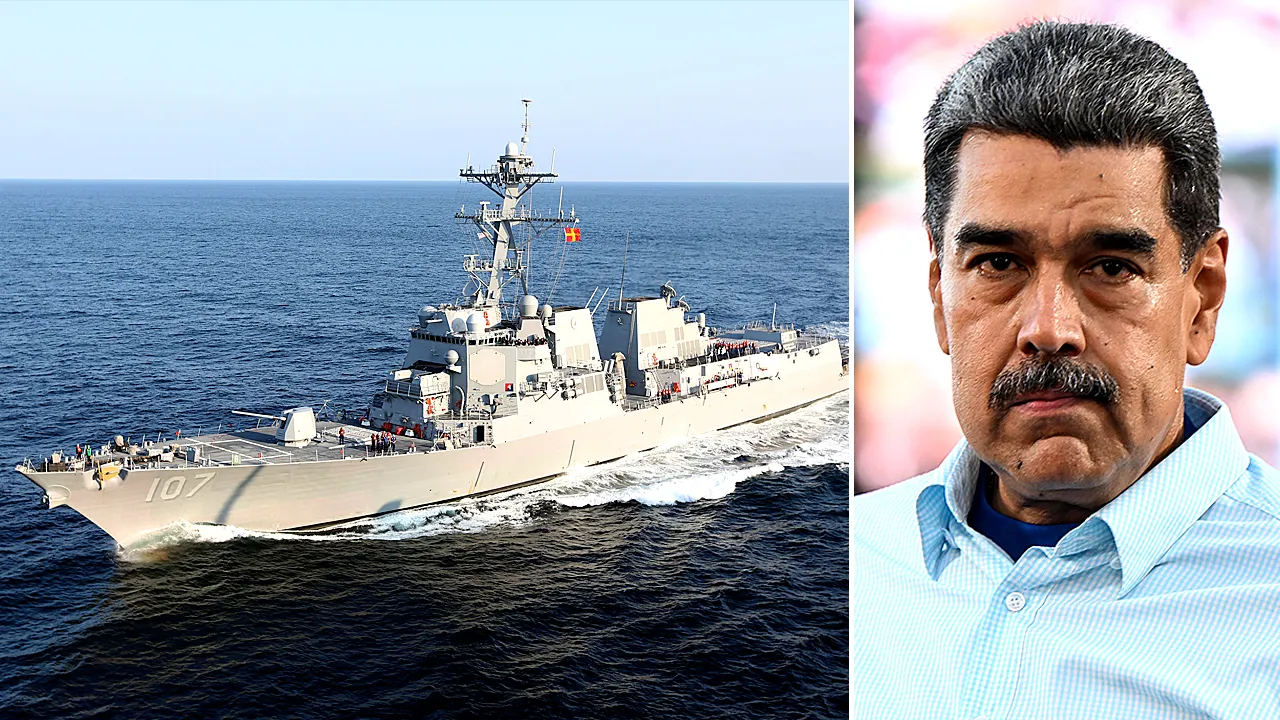
Let us be honest—brutally honest, the way history demands and empire resents.
What is unfolding in Venezuela, and across the wider Caribbean basin, has little to do with democracy, human rights, or some sudden moral awakening in Washington. It has everything to do with power—raw, unapologetic, strategic power—and the anxiety that sets in when that power feels challenged.
The United States does not intervene because a government is despotic. If that were the case, half the world’s strongmen would be facing sanctions before breakfast. The United States intervenes when dominance is threatened—when a small country dares to rearrange its economic loyalties, when it flirts with alternatives, when it whispers to Beijing or Moscow instead of kneeling to Washington.
This is not conjecture. This is pattern.
Take Venezuela. The hostility toward the Maduro government is not rooted in humanitarian outrage. It is rooted in the fact that Venezuela has chosen to deepen relations with China and Russia—to do business outside the American orbit. That is the unforgivable sin. Everything else—drugs, dictatorship, democracy—is stage dressing.
The same script plays across the Caribbean. Jamaica, like many of its neighbors, has welcomed Chinese investment: ports modernized, infrastructure built, capital flowing where Western lenders once stalled. Suddenly, “stability” becomes a concern. Suddenly, sovereignty is suspect. Funny how that works.
This is not about policing the world’s conscience. It is about preserving a hierarchy.
History offers receipts. In Guyana, the United States once supported a government that was neither democratic nor just—one that violently suppressed dissent and oversaw the assassination of revolutionary scholar Walter Rodney. That regime, led by Forbes Burnham, was later found culpable by a commission of inquiry. Yet at the time, it enjoyed American backing. Why? Because it played ball. It served U.S. interests. Morality, apparently, is negotiable.
Contrast that with today. Guyana now hosts massive U.S. oil interests, where American corporations extract vast wealth while the Guyanese people receive a fraction. That arrangement is deemed acceptable—commendable, even. But let Guyana decide tomorrow to nationalize its resources, to partner elsewhere, or to rely on itself, and watch how quickly the tone changes. Hypothetical? Hardly. We have seen this movie before.
Consider Cuba—decades under embargo, not because it threatens the world, but because it refuses submission. Consider Ukraine, punished by war for seeking stability outside one imperial sphere and into another. When small nations move independently, the ground shakes.
The language of “communism” is the oldest smokescreen in the book. It is wheeled out whenever convenient, retired when inconvenient. The real crime is not ideology—it is disobedience.
This is the central argument of my forthcoming book, Neoliberal Globalization Reconsidered: Unfair Competition and the Death of Nations. Nations do not collapse simply because of internal failure; they are often pushed—cornered by systems designed to ensure that wealth flows upward and outward, never inward, never locally, never freely.
And here lies the uncomfortable truth: empire does not require virtue. It requires compliance.
Yes, America wants to remain competitive. That desire is not irrational. But competitiveness built on coercion, embargoes, and destabilization is not leadership—it is fear masquerading as strength. And fear, history tells us, is a dangerous policy advisor.
The Caribbean must tread carefully. Sovereignty is costly. Independence comes with consequences. But the alternative—permanent subordination dressed up as partnership—is far more expensive in the long run.
So when the next embargo is announced, when the next intervention is justified, when the next small nation is scolded for choosing its own friends, ask the real question—not Is this government good? but Whose interests are being served?
Empire never lies outright. It simply changes the subject.
And if that makes anyone uncomfortable—good. Discomfort is the first sign that the spell is breaking.
Empire, Stability, and the Smokescreen of Morality
By Renaldo C. McKenzie | 12.23.2025
Renaldo is the Author of Neoliberalism and Neoliberal Globalization Reconsidered.
The books is available at
https://store.theneoliberal.com
This article was first published in The Neoliberal Journals, our parent Website
Make a one-time donation
Make a monthly donation
Make a yearly donation
Choose an amount
Or enter a custom amount
Your contribution is appreciated.
Your contribution is appreciated.
Your contribution is appreciated.
DonateDonate monthlyDonate yearly