

There is a peculiar silence that falls when power moves too fast for its own reflection. It is the silence of allies stepping back, of partners pausing mid-sentence, of a world watching—not with admiration, but with concern.
That silence now surrounds the United States.
In the unfolding conflict with Iran, the U.S. has chosen a path not merely of force, but of isolation. Many of its traditional allies in Europe and across the globe have declined to endorse or participate in the attack. Their hesitation is not accidental—it is principled. They are asking the questions that Washington seems unwilling to answer: Where is the evidence of imminent threat? Where was the consultation? Where was the patience for diplomacy?
Instead, the justification offered rests on possibility—what Iran could have done, what it might have done, what it may have become. But war, that most irreversible of human decisions, cannot be built on shadows and hypotheticals. To strike a sovereign nation without presenting clear and compelling evidence of an immediate danger is to stretch the bounds of international legitimacy to a breaking point.
And the world has noticed.
Reports suggest that Iran’s foreign minister is actively engaging with Russia, China, and the United Nations Security Council, raising claims that the United States has violated international norms and, perhaps, crossed into something even more serious. Whether those claims hold legal weight will be debated in halls of law and diplomacy—but politically, the damage is already unfolding in real time.
America stands increasingly alone.
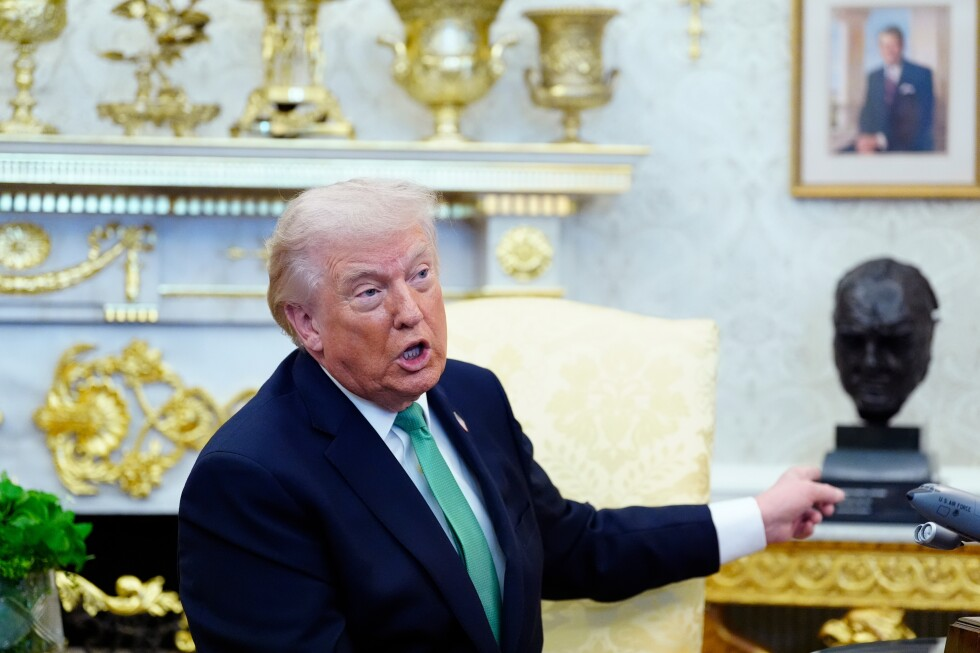
President Donald Trump, in a series of daily press conferences, has attempted to steady the narrative—offering justification, projecting confidence, and redefining the “end” of the conflict even as that end seems to drift further away. There is a tension in his posture: a nation that claims it does not need allies, yet appears eager to explain itself to them. It is the paradox of power—loud in declaration, uncertain in direction.
This is not merely a military question. It is a moral and strategic reckoning.
For decades, the United States has positioned itself as a steward of a rules-based international order—an order grounded in alliances, institutions, and shared norms. But what happens when that same nation bypasses those very structures? What happens when it acts first and explains later? The answer is what we are witnessing now: a slow erosion of trust, a quiet distancing of allies, and a growing perception that American leadership has become unpredictable.
History teaches us that isolation is not always immediate—it arrives in increments. A hesitant ally here. A declined coalition there. A vote withheld. A statement of “concern.” Until one day, the superpower that once led finds itself speaking mostly to itself.
And yet, this moment is not beyond redemption.
The United States still has the capacity to recalibrate—to return to diplomacy, to engage its allies with humility, to present evidence where claims have been made, and to recognize that leadership is not the same as unilateralism. Strength is not diminished by consultation; it is refined by it.
If there is a lesson in this unfolding crisis, it is this: power without legitimacy is noise. And noise, no matter how loud, does not command the world—it unsettles it.
America now stands at a crossroads, not just of war, but of identity.
Will it lead with others—or walk alone into the storm?
Written by Rev. Renaldo McKenzie. Renaldo is the Author of “Neoliberalism, Globalization, Income Inequality, Poverty and Resistance” and the upcoming book “Neoliberal Globalization Reconsidered, Unfair Competition and the Death of Nations”. Available at https://store.theneoliberal.com
This article was submitted as an Op-ed to the Jamaica Gleaner.